


 Facebook
 Google
7 things you didn't know about eye protection
Published:
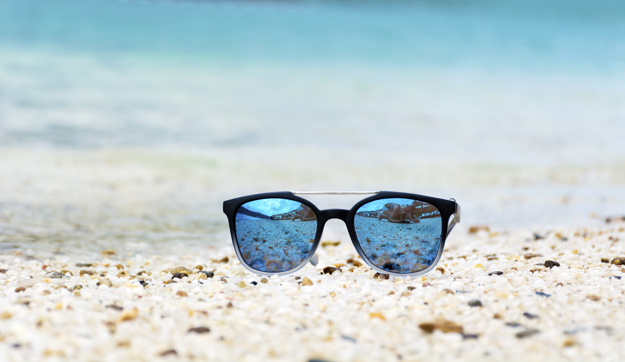
- Sand and water at the beach can reflect an additional 25% of UV rays.
- UV rays come from the sun and exist in three forms: ultraviolet A, B, C. However, UVA are 30-50% more prevalent.
- The UV radiation level increases by 4% for every 1000 metres of altitude.
- Surfaces covered with snow reflect 8% of UV rays, which adds to the exposure.
- The eyes and ocular surfaces are most at risk between 8 and 10 in the morning and 2 and 4 in the afternoon, when the sun is relatively low in the sky.
- UV rays are strongest between 10 in the morning and 4 in the afternoon.
- UVA rays make up 95% of UV radiation.
GENERAL TIPS.
- Choose lenses that block 99 to 100% of UVA and UVB rays.
- Prefer lenses that transmit 70 to 95% of visible light.
- Do not swim with contact lenses and always wear sunglasses and a hat.
- Put sunglasses on children (they receive 3 times the annual amount of solar radiation exposure of adults, yet very few of them wear sunglasses).
- Buy sunglasses only from optical stores.
- Trust your optician-optometrist.