


 Facebook
 Google
Vision questions that concern parents
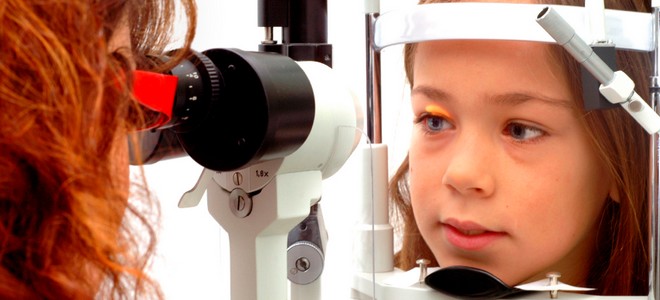
Will my child develop more myopia if they read a lot or watch a lot of television? What is the process of protecting the child's eyes in preschool and school age both in play and in sports?

Let us look at the typical questions that concern parents and the family of children, about vision, and try to answer them:
I, the father or the mother, have very high myopia and I want to find a way for my child not to get it too. Is that possible?
The answer to this question is that myopia is not completely hereditary. Certainly families that have individuals with myopia will more often have children with myopia, so there is some form of heredity but not absolute.
From what we know today in the scientific field about the formation and function of the eyes, there is no way at a young age for someone to avoid myopia or hyperopia. It is something genetically determined in the newborn from the time of pregnancy, and indeed with various diagnostic methods an ophthalmologist can know approximately how much myopia or how much hyperopia a small child will have from this examination at the age of just six months.
So parents who have high myopia or hyperopia should not be afraid that they are doing something wrong or not doing something right so that their children avoid this problem.
Will my child develop more myopia if they read a lot or watch a lot of television?
Again, according to the American Academy of Ophthalmology and the American Academy of Pediatrics, activities that require the sense of vision do not change the refractive status of the child. That is, a child cannot develop myopia by reading a lot.
Rather the opposite happens. A child who reads a lot or watches a lot of television asks a lot of their visual system, with the result that these visual, refractive abnormalities are found earlier and corrected, so that this child can function with less effort in reading or television.
What is the process of protecting the child's eyes in preschool and school age both in play and in sports?
It should be noted that, unfortunately even in our country, there are very many toys that can put children's vision at significant risk. It is unnecessary to mention that any air-gun toys are extremely dangerous and many cause permanent and horrifying damage to children's eyes, as the projectiles they use are usually made of lead and if they happen to injure a child's eyes this happens with very high speed and with devastating results on the child's further vision from that eye.
The use of any air-gun toy by children is therefore prohibited, and of course parents who use such 'adult toys' should lock them and isolate them from use by their children.
It is of course at the discretion of parents and manufacturers that many other toys that use sharp objects that can be projected at high speed can endanger the health of the eyes.
Such can be bows and arrows, or toy guns that shoot suction cups etc. All these toys, depending of course on their sharpness, can endanger the vision of children.
My child has strabismus. Their eyes, one or both of their eyes, 'wander'. Will this go away with time?
Every small child, as soon as it is noticed that they have any form of strabismus or their eye may wander, needs a very quick but also very important ophthalmological examination either by the paediatrician or by the ophthalmologist.
The reason is obvious from what we mentioned above, because very commonly a small child who begins to develop amblyopia will also develop strabismus. Thus, the formation of strabismus in a child is a red flag for the health of the eyes, both regarding amblyopia, that is the for some reason reduction of vision from one eye, and in extremely rare cases the formation of some malignant tumour in one of the two eyes.
So at any moment that parents notice the formation of strabismus, that is also the moment when an immediate ophthalmological examination will be needed.
In my child, one of the two eyelids seems to be more 'lazy', it stands lower than the other. Is this something that will improve?
Here things are a little different from the previous question. Usually the 'drooping', as it is scientifically called, of the eyelid when it is in one of the two eyes and when it does not cover the pupil of the eye is something that usually passes with age or improves significantly.
It should be noted however that in exceptional cases in which the drooping causes the eyelid to cover the whole eye of the child with the result that it also covers the pupil of the eye, it does not allow the child to see the outside world from that eye and can indirectly cause significant damage to the visual system by depriving it of visual stimuli, which, as we mentioned before, can form a very difficult episode of amblyopia.
My child has myopia and is at school. How can we make it disappear?
We all live in an era in which the correction of myopia, hyperopia and astigmatism with laser is done with tremendous success. We know from US statistics that this year over a million people will correct their myopia, hyperopia or astigmatism with a small laser procedure.
Of course, both in our country and in the European Union, as well as in the USA, this is an operation that is performed only at ages above 18 and provided that the myopia, hyperopia or astigmatism have been judged by the ophthalmologist to be at a stable level.
So there is no method today that 'corrects' myopia, hyperopia or astigmatism in children of preschool or school age.
source: www.iatronet.gr