


 Facebook
 Google
Vision and safe driving
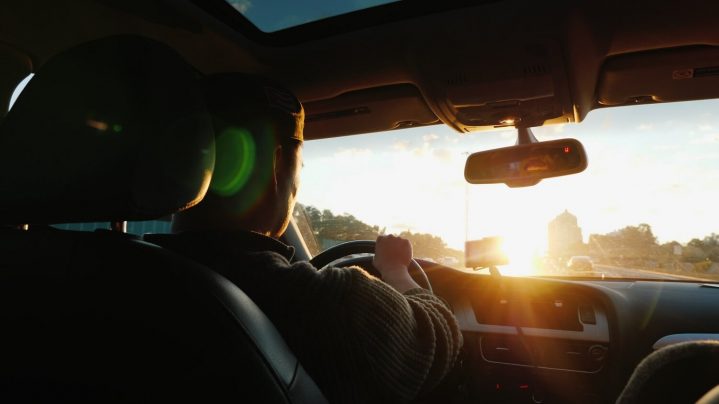
Modern lifestyles and covering long distances in a short time create an imperative need for the use of cars. Driving is one of the main ways of transport in our daily lives. With the increased use of cars there is a greater risk of accidents on the road network. For this reason potential drivers must meet certain criteria for the safety of both themselves and their passengers, as well as of pedestrians.
Clear and comfortable vision is one of the basic elements for safe driving for drivers and those who move on the roads, because through the eyes they perceive 90% of the information they need. The criteria that must be met for the granting of an amateur licence are the following:
- The visual acuity of the two eyes with or without correction must be cumulatively at least 10/10. In the case that the visual acuity of one eye with correction is less than 2/10 and the visual acuity of the other at least 8/10, the candidate driver falls into the category of monocular vision, and provided there is a diagnosis of at least 6 months, the renewal of their driving licence is done every 1 to 5 years (in cases also of deafness then a driving licence is not granted).
- Furthermore, the examinees must distinguish the basic colours red, yellow and green as well as, in cases where a disturbance of the visual field of one eye is detected, a licence is granted provided the visual acuity of the other eye with or without correction is at least 8/10 and the visual field is complete. This particular driver undergoes periodic re-examination every 3 years. If there is a condition e.g. glaucoma, which can cause disturbance of the visual field of the healthy eye, the re-examination is performed in a shorter period.
- The visual field of each eye is not allowed to be less than 120 degrees in the horizontal plane. Similarly in cases of manifest strabismus or diplopia where the vision of one eye will be corrected with special glasses, occlusion or contact lens. When the candidate driver has undergone cataract surgery or corrective refractive laser, the driving licence is granted after three months and provided the conditions of the required visual acuity are met.
Vision in driving is affected by some factors such as the driver's age, the presence of some refractive error or eye condition (e.g. glaucoma, cataract etc). The external factors that can affect safe driving are intense changes in brightness during day and night but also weather conditions (e.g. fog).
During the day we should wear sunglasses and refractive drivers the required corrected prescription. Sunglasses have the ability to absorb ultraviolet radiation (UVA and UVB) as well as blue radiation, increase colour perception and reduce reflections. This is achieved especially with the use of polarised lenses, which limit reflections from smooth surfaces such as the windscreen and the asphalt. Drivers can also use photochromic lenses that are functional both in intense sunshine and in the evening hours. With their use we are also protected from external factors such as wind and dust. Sunglasses should be purchased from optical stores and with the help of opticians we can find the appropriate ones based on our personal needs.
After the age of 40 the lens of the eye loses its ability to adjust quickly and peripheral vision is reduced. In the evening hours when brightness is limited driving becomes even more difficult and the lights on the roads cause light diffusion and glare in drivers' vision due to the brightness of the vehicles' headlights. These individuals have difficulty in intense changes of light, especially at sunrise and sunset (glare).
Criteria for safe and comfortable driving
1 Regular eye examination once a year.
2 Use of corrective glasses or contact lenses while driving at all hours and a spare pair of glasses in the car.
3 Avoidance of visual fatigue on long trips by making frequent stops every 2 hours (about 200km).
4 Clean windows (the windscreen) and the car mirrors, check of the bulbs of the headlights.
5 Use of quality sunglasses to absorb radiation and reflections.
6 Observance of speed limits and obedience to signs
7 Use of seat belt preventing possible injuries to the eyes.
8 And finally, in cases where medication is used that can affect vision or reflexes, generally avoid driving (antihistamines, sedatives, treatment for Parkinson's etc).
Vision is one of the basic elements for comfortable and safe driving on road networks, reducing the probability of accidents.
With a republication from Eye Magazine