


 Facebook
 Google
CHILDREN'S VISION AND THE IMPORTANCE OF MANAGING IT
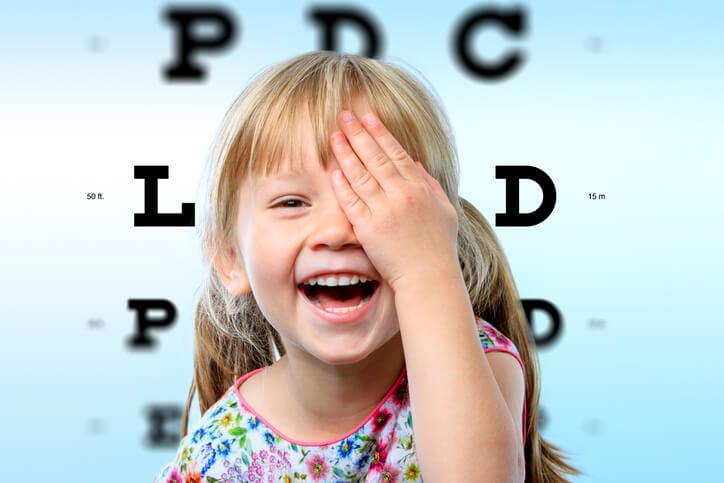
THE IMPACT OF MYOPIA. The incidence of childhood myopia has increased. Approximately 30% of the world's population is now myopic, with a forecast to reach 50% (about 5 billion) by 2050.
Myopia occurs when the eye shows increased elongation in its axial length, with the result that it ends up larger in size and volume than emmetropic eyes.
The excessive axial elongation associated with high myopia is likely to cause structural changes in the eye and is an important risk factor for serious eye diseases, such as myopic maculopathy, retinal detachment, cataract and glaucoma.
In these cases high myopia is called pathological and leads to vision loss even when corrected refractively, while it can even result in blindness.
IS MY CHILD AT RISK OF DEVELOPING MYOPIA?
The causes of the onset of myopia are multifactorial: - Age: The earlier a child develops myopia, the greater the risk of progression to high or even pathological myopia in adulthood.
- Ethnicity: Asians show higher rates of myopia and greater rates of myopia progression compared to populations in the Western world.
- Genetic predisposition : It had prevailed in the past as the main cause of myopia; today we know that there is simply a "predisposition".
Children with 1 myopic parent have a 3 times greater risk of developing myopia, while children with 2 myopic parents about 6-8 times.
- Environmental factors: The results of recent research show that the main cause of the rapid increase in myopia... DIAGNOSIS - CORRECTION - MANAGEMENT OF MYOPIA. The diagnosis of myopia is only the beginning of its evolutionary course.
The correction of myopia with glasses or contact lenses restores the clarity of vision, but is NOT a method of slowing the progression of myopia.
The management and treatment of childhood myopia is ensured with contact lenses and specially designed glasses, which provide homogeneous correction across the entire range of vision.
This is achieved more easily and functionally with contact lenses, because the correction they ensure is not affected by the gaze position of the eyes.
By slowing the progression of myopia we have a positive effect on our child's daily life (better vision quality, participation in sports activities, increased self-confidence) while we ensure future benefits in terms of their vision and eye health.