


 Facebook
 Google
MYOPIA PREVENTION IN CHILDREN
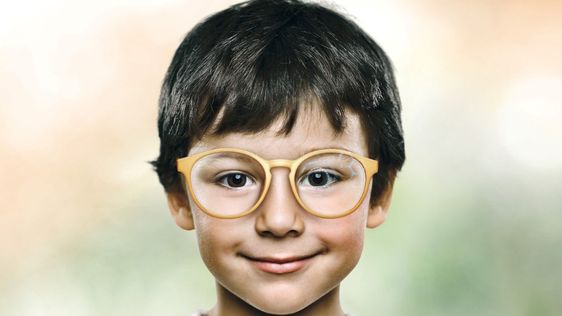
In the European market, there are new and innovative contact lenses and spectacle lenses designed for myopia control.
More recently, multifocal contact lenses have been used that ensure under-correction in the periphery of the retina relative to the axial correction, slowing the progression of myopia in children.
The common goal is to slow down and stop the progression of myopia.
In conclusion, it is necessary for the competent bodies to ensure that students receive regular eye examinations at young ages, preferably every year, so that preventive strategies can be used if they are at risk of developing myopia.
A PIONEERING LENS
This revolutionary lens based on the patented Defocus Incorporated Multiple Segments (D.I.M.S.) technology was developed in collaboration with the Hong Kong Polytechnic University in 2014.
It is easy to fit, just like ordinary contact lenses.
This lens corrects the optical defect over its entire surface and has a ring-shaped treatment area to slow the progression of myopia.
The alternation of the focus area provides clear vision and manages myopia at the same time.
SPECTACLE LENSES DESIGNED
TO FIT A CHILD'S ACTIVE LIFE
These spectacle lenses also feature a special anti-reflective, durable coating.
Eye Shield provides impact resistance and protection from ultraviolet radiation.
Features:
•Impact resistant
•Thin and light
•UV protection
ARE THEY SAFE
FOR CHILDREN?
A child-friendly, safe and effective, non-invasive method for slowing the progression of myopia.
SIMPLE MANAGEMENT
OF MYOPIA OR SLOWING
ITS PROGRESSION?
In recent decades, myopia has become an epidemic in the countries of East and Southeast Asia, with its incidence in adolescence exceeding 80%.
Based on current growth trends, it is estimated that by 2050 half of the world's population will be myopic.
Moreover, the prevalence of high myopia, also called "pathological", is dangerously increasing, because it has been proven to be a significant cause of vision loss as well as a strong risk factor for serious eye diseases.
Research leads to the conclusion that myopia is a condition with an indeed epidemic character, which fortunately does not progress the same way in everyone.
Findings suggest that low myopia at young ages can develop into pathological myopia in adulthood.
In children the problem is growing and it is estimated that there will be significant growth worldwide due, also, to the increase in work in front of digital devices, especially during the COVID 19 pandemic.